
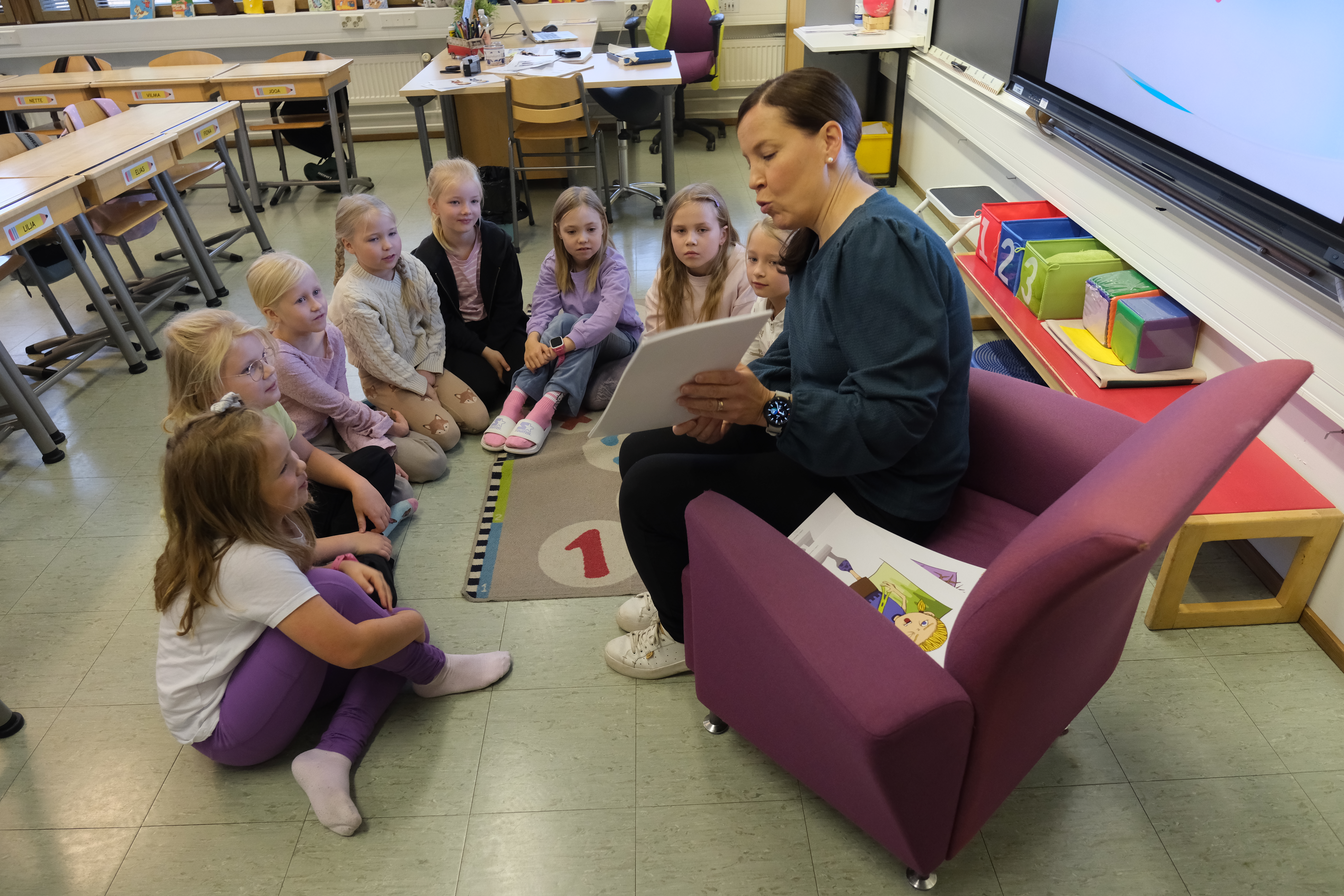
On 5 February OECD hosted a webinar on the role of empathy in education policymaking, practice, and assessment. Moderated by Catharina Gress-Wright, the panel brought together four leading experts from research, government, and practice. The discussion featured Professor Christina Salmivalli, Deputy Head of the INVEST Flagship Research Center and Director of the KiVa antibullying program at the University of Turku; Isabel Segovia, Secretary of Education of Bogotá; Subbu Parameswaran, Co-Founder and CEO of Learning Curve Life Skills Foundation; and Professor Rory Devine from the University of Birmingham.
Empathy and Bullying: A Clear Connection
The panel began by addressing two questions: What is empathy, and how is it linked to bullying?
Prof. Rory Devine described empathy as a cornerstone skill that underpins collaboration and healthy peer relationships in schools. Professor Salmivalli emphasized the strong evidence linking low levels of empathy to bullying behavior. Prof. Salmivalli explained that the KiVa antibullying program strengthens affective empathy through both preventive and intervention strategies.
“When we want to create systems where empathy thrives, we need to make the bystanders react differently as this is strongly associated with empathy.”
Panelists stressed that empathy alone is not sufficient as students need tools and guidance on how to translate empathetic understanding into constructive behavior. Prof. Salmivalli explained how KiVa demonstrates how empathy can be paired with concrete strategies and action.
A Whole-School and Policy Approach
Isabel Segovia shared how Bogotá has integrated empathy into policymaking through evidence-based strategies. In the Colombian capital, school climate is seen as central to fostering empathy. Resources such as psychologists and counselors are aligned with student needs, and measurement tools are used to guide policy planning and track progress.
Subbu Parameswaran advocated for a holistic, whole-school approach. Empathy cannot be taught in isolation as it is learned through everyday interactions, adult modeling, and school culture. Intentional and structured spaces are necessary to nurture empathy, while remaining sensitive to cultural nuances. Panelists agreed that empathy exists across cultures, even if expressions of empathy varies.
Teacher training was identified as another critical area. Empathy should be embedded in teacher education frameworks, acknowledging that empathy exists on a continuum and differs among individuals. Providing educators with concrete tools, structured time, and community engagement can help translate theory into practice. In empathy teaching, intentional and structured spaces are key.
Measuring and Sustaining Empathy
A recurring theme was the importance of evidence-based measures. While measuring empathy can be complex, tracking change and identifying students who may need additional support are essential. Bogotá’s experience demonstrates how data can inform policy without labeling children, focusing instead on guidance and correction.
The conversation also addressed concerns about placing too much responsibility on students. Rather than shifting the burden onto children, panelists emphasized creating systems in which empathy thrives through leadership, school climate, and collective responsibility. School leaders, in particular, play a vital role in setting a culture of safety, inclusion, and respect.
One Next Step
When asked to identify one priority action, panelists highlighted classroom diversity and inclusive environments as powerful drivers of empathy. Exposure to different perspectives, shared stories, and open expression of emotions can deepen understanding among students. Designing conditions where empathy thrives embedding empathy in policies and all school activities was seen as a key element in raising empathy.
The webinar concluded with a shared message: empathy must move beyond theories and become a structured, measurable, and intentional component of both policy and practice. By combining research, policy, and practice, schools can create environments where empathy flourishes.
Read a 2021 published article on KiVa Antibullying Program’s effects on Empathy in Children and Adolescents here.