

Evidence-Based Approaches Are Most Effective in Addressing Bullying
As awareness of the harmful effects of school bullying has grown, schools around the world have increasingly been expected to take action. In many countries, legislation now requires schools to have clear policies or action plans for preventing and addressing bullying. Alongside these policy changes, many school-based anti-bullying programs have been developed and evaluated (e.g., Gaffney et al., 2019).
Most research on these programs has focused on whether they succeed, on average, in reducing bullying and victimization. Much less attention has been paid to targeted interventions: how teachers respond when a bullying case comes to their attention, how they discuss the situation with the students involved in order to stop the bullying, and how effective these discussions are in stopping bullying. Beyond asking which intervention approaches work best, it is also important to consider whether schools actually use the practices they are recommended to use. After all, even the evidence-based approaches cannot work if they are not put into practice in schools.

In the study “Different Approaches to Address Bullying in KiVa Schools: Adherence to Guidelines, Strategies Implemented, and Outcomes Obtained“, we examined how Finnish schools implementing the KiVa antibullying program between 2009 and 2015 intervened in bullying cases. Specially, we examined how often schools used the evidence-based approaches recommended by the program, whether these practices changed over time, and how effective the different approaches were in stopping bullying.
The KiVa program recommends using either a confronting or a non-confronting approach when discussing with bullying perpetrators. In the confronting approach, the goal is to stop bullying by setting clear boundaries and condemning the bullying behavior. During the intervention discussion, perpetrators are told that their behavior has come to the attention of school personnel, is not acceptable, and must stop immediately.
In the non-confronting approach, the situation is discussed differently. Rather than accusing the perpetrators, the adult expresses concern for the victimized student and the difficulties they are experiencing. The aim is to arouse perpetrators empathy for the victimized peer and to encourage them to take responsibility by asking them to suggest ways to resolve the situation.
In addition to these initial discussions, the program strongly recommends organizing follow-up meetings about two weeks later. These follow-ups are meant to ensure that the bullying has actually stopped and to signal to students that the situation is being monitored and taken seriously.
The study included data from 1.221 Finnish comprehensive schools (978 primary schools and 243 lower secondary schools) that responded at least once to the annual KiVa surveys for teachers and students during the six-year follow-up period.
Evidence-Based Approaches Are Most Effective in Addressing Bullying
Overall, the results showed that initially most schools followed the program guidelines and used the recommended approaches when intervening in bullying cases, either by consistently using one approach (confronting approach and non-confronting approach) or by choosing the approach depending on the situation (case-specific approach). Over time, however, schools’ practices began to change, and an increasing number of schools reported using their own adaptations instead of the recommended approaches.
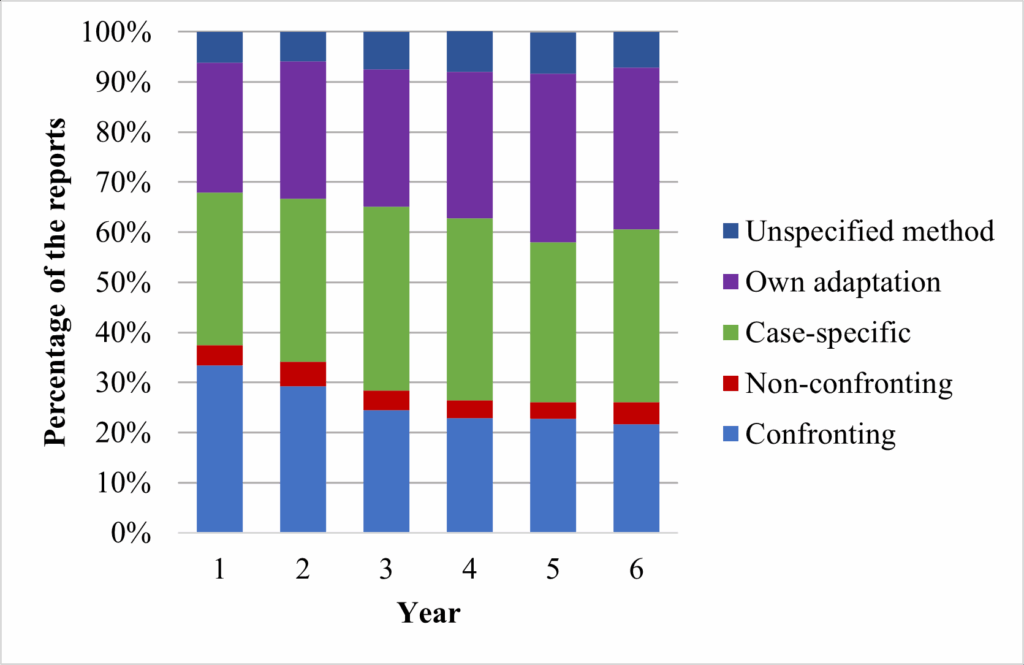
Figure 1. Used approaches during the different years of program implementation.
Intervention effectiveness was examined from both teachers’ and victimized students’ perspectives. According to victimized students, the interventions were overall quite effective: victimization decreased or stopped in 74% of cases addressed by school personnel. Importantly, victimization was more likely to stop when schools had used the evidence-based approaches recommended by the program, compared to cases where schools relied on their own adaptations or could not specify how they had intervened. Follow-up discussions also made a difference. Victimization was more likely to stop in schools that systematically organized follow-up meetings after each intervention (as recommended) than in schools that did so only occasionally or not at all. In other words, schools that adhered to the program’s guidelines more closely were more likely to succeed in stopping victimization.

Although schools’ interventions were effective in reducing or stopping bullying in many cases, the results also raise an important concern. In 26% of the cases, the interventions did not succeed, and bullying continued despite schools’ efforts. For these children and adolescents, the distress caused by bullying did not end with adult intervention. Alongside identifying best practices, future research is therefore needed to better understand why interventions sometimes fail and how schools can respond more effectively in these challenging situations.
Blog is based on a study:
Johander E., Turunen T., Garandeau C. F., & Salmivalli, C. (2021). Different Approaches to Address Bullying in KiVa Schools: Adherence to Guidelines, Strategies Implemented, and Outcomes Obtained. Prevention Science. https://doi.org/10.1007/s11121-020-01178-4
Authors:
Eerika Johander, PhD, is Postdoctoral Researcher at the INVEST Research Flagship Center at the University of Turku.
Tiina Turunen, PhD, is Senior Researcher at the INVEST Research Flagship Center at the University of Turku.
References:
Gaffney, H., Ttofi, M. M., & Farrington, D. P. (2019). Evaluating the effectiveness of school-bullying prevention programs: An updated meta-analytical review. Aggression and Violent Behavior, 45, 111–133. https://doi.org/10.1016/j.avb.2018.07.001